
🚀🔧 Start an HVAC Technician Career in 7 Weeks
💼 No experience required | 💰 PAID TRAINING
🔥 Heating and air conditioning training programs provide structured pathways for individuals to enter technical trade careers.
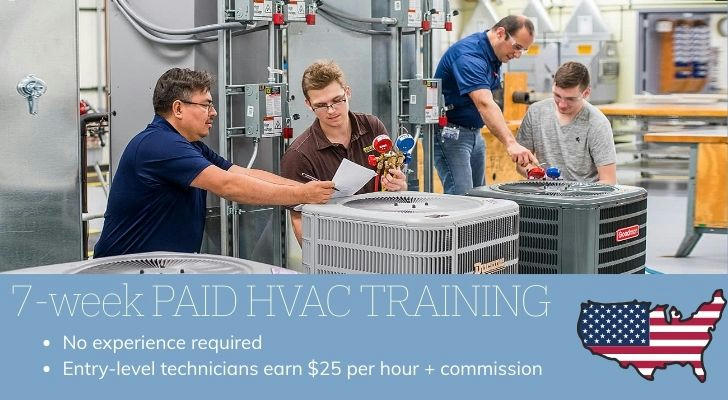
✔ ⏱ 7-week structured training program
✔ 💵 Training compensation provided during program
✔ 📈 Entry-level technicians earn $25 per hour + commission
🔥 Why Choose This Program
7-Week Structured Training Program
This HVAC training program includes a 7-week structured learning period designed to prepare participants for entry-level technician roles.
The training is organized to combine both theory and hands-on practice, helping learners develop practical job-ready skills in a short timeframe.
Training typically includes:
📘 Classroom instruction
🛠 Technical skill development
🏠 Field-based learning experience
This structured approach allows participants to build a strong foundation in HVAC systems, tools, and service procedures.
💰 Training Compensation Provided
Some programs offer paid training during the learning phase, allowing participants to gain experience while receiving compensation.
This structure helps reduce financial pressure and enables learners to focus on developing technical skills without needing to delay income opportunities.
💵 Entry-Level Pay Structure
After completing training, HVAC technicians may begin with a competitive entry-level compensation structure.
Typical earnings may include:
💲 $25 per hour (base pay)
📈 Additional commission opportunities based on performance
This pay model rewards both technical ability and customer service performance.
📈 Income Growth Potential
With continued experience and skill development, HVAC technicians may increase their earning potential over time.
Typical income ranges may include:
💰 $55,000 – $85,000 annually (within 1–3 years of experience)
Income levels may vary depending on:
- Performance and productivity
- Technical specialization
- Workload and service demand
This career path offers the opportunity for steady income growth in a high-demand trade industry.
🧰 Tools and Equipment Provided
Many programs provide access to essential tools and equipment needed for the job.
Participants may receive:
🔧 Professional tools
🚐 Work vehicles
⚙ Technical equipment
This allows individuals to begin working without needing to invest in expensive equipment upfront, making entry into the field more accessible.
🛠 Job Duties & Skills
HVAC technicians are trained to perform a variety of essential technical tasks related to heating, ventilation, and air conditioning systems.
Common responsibilities may include:
🏠 Installing heating and cooling systems
🔧 Performing maintenance on HVAC equipment
⚠ Diagnosing and repairing system issues
💬 Communicating service options to customers
These tasks require a combination of technical knowledge, problem-solving ability, and customer interaction skills.
Most work is performed in residential environments, where technicians provide installation, maintenance, and repair services.
🌤 Work Environment
HVAC technicians may work in a variety of environments depending on the job and service location.
Typical work settings may include:
🏡 Residential homes
🏢 Rooftops and outdoor areas
🪜 Attics, garages, and crawlspaces
The role often involves physical activity such as:
- Lifting equipment
- Climbing ladders
- Working in different weather conditions
This makes the position suitable for individuals who are comfortable with hands-on, active work environments.
🚀 Career Path
After completing the training program, participants may pursue several entry-level roles within the HVAC field.
Potential career paths include:
🔧 HVAC Service Technician
🏗 Installation Technician
🛠 Maintenance Technician
With experience, technicians may increase their earnings through:
📈 Performance-based commissions
📚 Advanced technical certifications
⚙ Specialized system expertise
The HVAC industry offers long-term career potential with opportunities for skill advancement and income growth.
📋 Program Requirements
Applicants are typically required to meet certain eligibility criteria before enrolling in the training program.
Common requirements may include:
✔ Valid driver’s license
✔ Ability to pass a background check and drug screening
✔ Strong communication and customer service skills
✔ Ability to perform physical technical work
These requirements help ensure that participants are prepared for both the training and the job responsibilities.
⭐ Program Advantages
This HVAC training program offers several key benefits for individuals seeking a fast entry into a technical career.
✔ Short training timeline (7 weeks)
✔ Training compensation available
✔ Entry-level pay starting at $25/hour
✔ Commission-based income opportunities
✔ Career growth potential up to $55,000–$85,000 annually
These advantages make the program a practical option for those looking to enter a skilled trade without long-term education commitments.
❓ Frequently Asked Questions
Q: Is prior HVAC experience required?
No. Many programs are designed for beginners and provide foundational technical training.
Q: Is the training really paid?
Some programs offer compensation during the training period, depending on program structure.
Q: What skills are learned during the program?
Participants learn installation, maintenance, diagnostics, and customer communication skills related to HVAC systems.
Q: What can technicians expect after completing training?
Graduates may begin working in entry-level roles with hourly pay and commission opportunities, with potential for income growth over time.
A structured HVAC training program provides a clear pathway into a technical trade career, combining hands-on learning, income potential, and long-term growth opportunities. 🔧