
🍁 Canada PSW Training with Government Support | Get Certified and Start Working
🏛️ Government-Funded Training · 🎓 No High School Diploma Needed · 💼 Job Support · 📉 No Tuition Pressure
Becoming a Personal Support Worker (PSW) in Canada offers a practical pathway into the healthcare sector, especially with programs supported by government-linked funding. Through official PSW certificate courses, learners gain the skills needed to assist individuals with daily living activities, and, upon completion, are ready to pursue employment in care settings across the country. PSW Training programs combine theoretical knowledge with hands-on experience in real care environments.
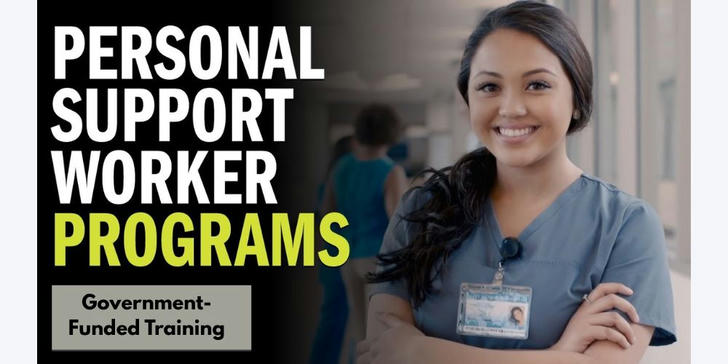
🏛️ Government Support + Incentives for PSW Students
This government‑supported PSW training includes funding incentives designed to assist learners during and after training:
- Clinical Placement Stipend (up to $5,440) – Students enrolled in an approved PSW program may receive support while completing clinical placement hours in long‑term care or community care settings.
- Recruitment Incentive ($10,000) – Graduates who commit to 12 months of full‑time work with a participating employer can qualify for a recruitment bonus.
- Rural / Relocation Incentives – Additional supports may be available for graduates who work in rural, remote or northern communities.
These funding measures help lower financial barriers to training and support transition into high‑demand care roles.
🌟 Key Benefits
Key benefits of PSW training programs include:
Many government-supported programs — including the St. Louis PSW Certificate — are tailored for learners without a traditional high school diploma. Students can earn up to 7 elective secondary school credits that may contribute toward completion of the Ontario Secondary School Diploma (OSSD) or enhance future academic transcripts.
🩺 Practical, job-oriented skills that match employer needs
📜 Certification recognized within the healthcare sector
💼 Connections to job resources and career supports
By completing a PSW course, learners gain confidence and competences that can lead to stable employment across diverse care environments.
🎯 Course Goals
The PSW training prepares students to confidently support individuals who need help with everyday tasks. Key learning goals include:
- Assisting with personal care and daily activities
- Supporting mobility and safe transfers
- Understanding body systems and health conditions
- Communicating effectively with clients and care teams
- Applying safety, hygiene, and documentation practices
This blend of skills equips learners to work in long-term care, home care, retirement communities, and other healthcare settings.
📘 What You Will Learn
The curriculum covers a range of important topics, including:
- Role of the worker and interpersonal skills
- Anatomy and physiology related to ongoing conditions
- Household management, nutrition and hygiene support
- Mental health, developmental and cognitive impairment care
- Assisting with medications and end-of-life support
- Job skills such as resume building and interviewing
In addition to core modules, the program includes lab practice and clinical placements totaling several hundred hours to build hands-on competence.
🎖️ Additional Care Certificates Included
As part of the PSW program curriculum, learners gain further recognized credentials that enhance employability, such as:
- Gentle Persuasive Approaches (GPA®) in Dementia Care
- Fundamentals of Hospice Palliative Care Certificate
- Safe Food Handling Certificate
- Workplace Hazardous Materials Information System (WHMIS)
- Standard First Aid & CPR-BLS — all included without needing pre-course training.
💼 Employment Opportunities After Training
Upon completing the PSW certificate, you’ll be prepared for roles such as:
- Personal Support Worker in long-term care homes
- Home health aide in private residences
- Support provider in community care programs
- Care assistant in retirement communities
- Healthcare support staff in hospitals and clinics
The need for qualified PSWs remains strong due to Canada’s aging population and expanding home care services.
⏱️ Program Duration and Certification
- Typical duration: Approximately 6–12 months, depending on the model and placements.
- Certification: Graduates receive a PSW certificate recognized by career colleges and employers across Canada, demonstrating job-ready skills and training.
📝 How to Apply
Application typically involves the following steps:
- Pre-registration: Submit a pre-registration form to indicate interest in upcoming intakes.
- Literacy assessment: Applicants are invited to take a literacy test as part of the intake process.
- Intake session and interview: Successful applicants are invited to intake and interview, which determines final placement.
No traditional high school diploma (Ontario Secondary School Diploma — OSSD) is required to enter the PSW program, and students may earn up to 7 elective secondary school credits that can contribute toward their transcript.
❓ Frequently Asked Questions
Do I need a high school diploma to enroll?
PSW programs have flexible admission standards and may accept mature students or offer alternative entry assessments, making the path accessible even without a traditional diploma.
Will the certificate help me find work?
Yes. PSW graduates are trained to meet the demands of healthcare employers, with practical skills that are directly applicable on the job.
Can the course be completed while working?
PSW programs offer hybrid or flexible formats that allow learners to balance training with other commitments.
📌 Conclusion
PSW training with government-linked support in Canada provides a solid foundation for launching a career in healthcare support. With official certification, practical experience, and strong demand for skilled workers, this pathway equips learners with the tools to enter the workforce and make a meaningful impact in people’s lives.